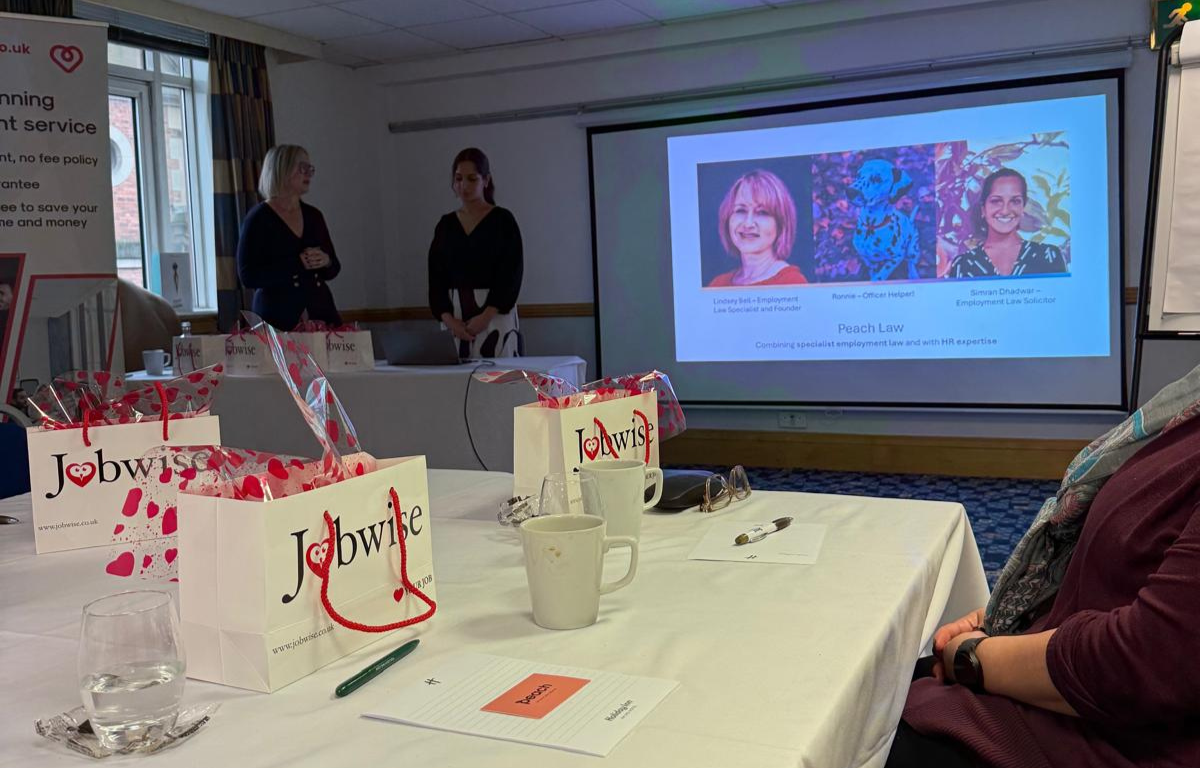
On Thursday 25th September 2025, we brought together employers, HR teams, and business leaders at the Holiday Inn, Bolton, for a relaxed and informative morning co-hosted with Peach Law. The aim was to give local businesses the clarity they need on the Employment Rights Bill 2026 and the strengthened duties around preventing sexual harassment at work.
The session, “Employment Rights Bill: A Tsunami of Reforms and Anti-Sexual Harassment: Have You Gone Far Enough?”, was led by Peach Law’s expert speakers — Lindsey Bell, Employment Solicitor and Managing Director, and Simran Dhadwar, Employment Solicitor, consisted of a breakdown of what’s changing and how these reforms will affect real workplaces. Peach Law’s experts guided attendees through each topic with examples drawn from offices, warehouses, customer service teams, and industrial environments.


The topics we covered
One important point raised during the seminar was that many of these reforms are still subject to change. Several elements of the Employment Rights Bill are still moving between the House of Commons and the House of Lords, and there is not yet full agreement on certain proposals. Attendees were advised that, while employers should begin preparing, some details may shift depending on final parliamentary decisions and any changes in government.
This uncertainty led to many questions from clients about what they “must” do now. Peach Law’s experts explained that, although definitive answers are not possible for every area yet, businesses can still take practical steps to reduce risk - particularly around harassment prevention, policy updates, and documenting decisions.
Attendees received clear, straightforward explanations of:
-
Current anti-sexual harassment duties
-
What proactive anti-sexual harassment prevention measures look like day to day
-
Whistleblowing linked to harassment disclosures
-
Family leave updates, including day-one entitlements (where applicable)
-
Bereavement leave updates
-
Flexible working and the new reasonableness test
-
Changes to unfair dismissal rules
-
Fire-and-rehire reforms
-
Updated statutory sick pay rules
-
Requirements for zero and low-hour contracts
-
New Acas Conciliation and Employment Tribunal time limits
-
Industrial action reforms
-
Increases to collective redundancy consultation requirements and protective awards
We didn't want to overwhelm anyone with legal jargon, but gave employers a clear picture of what’s coming, what matters most, and what needs attention.
Unfair dismissal protection: now expected after 6 months
One key update since the seminar is that ordinary unfair dismissal protection is no longer expected to become a day-one right. Current guidance indicates it is expected to apply after 6 months in the role, rather than from the first day. This would still be a major change from the current two-year qualifying period, but it gives employers more breathing space when onboarding new starters (with the usual day-one protections for discrimination and automatically unfair dismissals remaining in place).
What this means in practice is that probation and performance management processes will matter more than ever. Employers at the seminar spoke about setting clearer expectations early and keeping better records during the first months of employment.
Anti-sexual harassment duties
One of the biggest talking points was the requirement for employers to demonstrate that they are taking meaningful steps to prevent harassment, which has been a legal duty since October last year. This includes regular risk assessments, clearer reporting routes, visible leadership support, and training that actually resonates with staff rather than ticking a box. Busy workplaces, such as warehouses and call centres, may need more structure around this.
Zero- and low-hour workers
These workers will have the right to be offered guaranteed hours based on their hours actually worked over a defined period, and proportionate compensation for late shift cancellations. These changes mean businesses need more accurate rota planning and better communication.
Flexible working
Employers will only be able to refuse flexible working requests if it is reasonable for them to do so. Office-based roles may see the biggest rise in applications as many businesses are now mandating ‘office days’.
Family life
Parents will benefit from stronger protections and there will no longer be the requirement to use up paternity leave before the parent uses shared parental leave.
Collective redundancy consultation
Employers proposing more than 20 redundancies across the business or a “threshold” number of employees within a period of 90 days or less will be required to have a collective consultation, which may mean employers need to build in more time when planning restructures. The protective award for failing to meet consultation requirements will be doubled to 180 days.
What this means for recruitment
Hiring is likely to feel more careful and structured. Employers may introduce more detailed interviews, or request clearer performance expectations before offering a role.
With unfair dismissal protection expected after 6 months (rather than day one), many employers will still want to tighten their early-stage processes to reduce risk and improve retention.
Across all sectors, we expect more employers to seek support with consistent onboarding, contract reviews, and compliance-focused recruitment processes.


Sector impact
Commercial and office roles
-
More flexible working requests
-
Extra focus on early performance and documentation
Industrial and warehousing roles
-
Guaranteed hours may affect shift patterns
-
Cancellation penalties require more reliable planning
Customer service teams
-
Need for predictable shift coverage
As an employer, what should you do next?
Based on the discussions during the seminar, we encouraged employers to:
-
Update HR policies and handbooks
-
Review anti-sexual harassment training and reporting processes
-
Brief managers on early employment rights and updated qualifying periods
-
Tighten rota planning for temporary roles
-
Improve clarity in contracts
-
Review staffing models to ensure they remain practical under the new legislation
If you’d like to talk through how these changes may affect your business, support with compliance, or simply someone to sense-check your approach, Peach Law is here to help. If you want guidance on your hiring processes, Jobwise is happy to have a friendly conversation.
Get in touch with Peach Law if you’d like support preparing for the new legislation and ensuring your workforce is ready for the changes ahead.
A final note: As several elements of the Employment Rights Bill are still progressing through Parliament, some details may evolve. We’ll continue to keep our clients updated as the situation develops and provide guidance as soon as new information is confirmed.
Follow Jobwise and Peach Law to keep up to date on the next one.
